
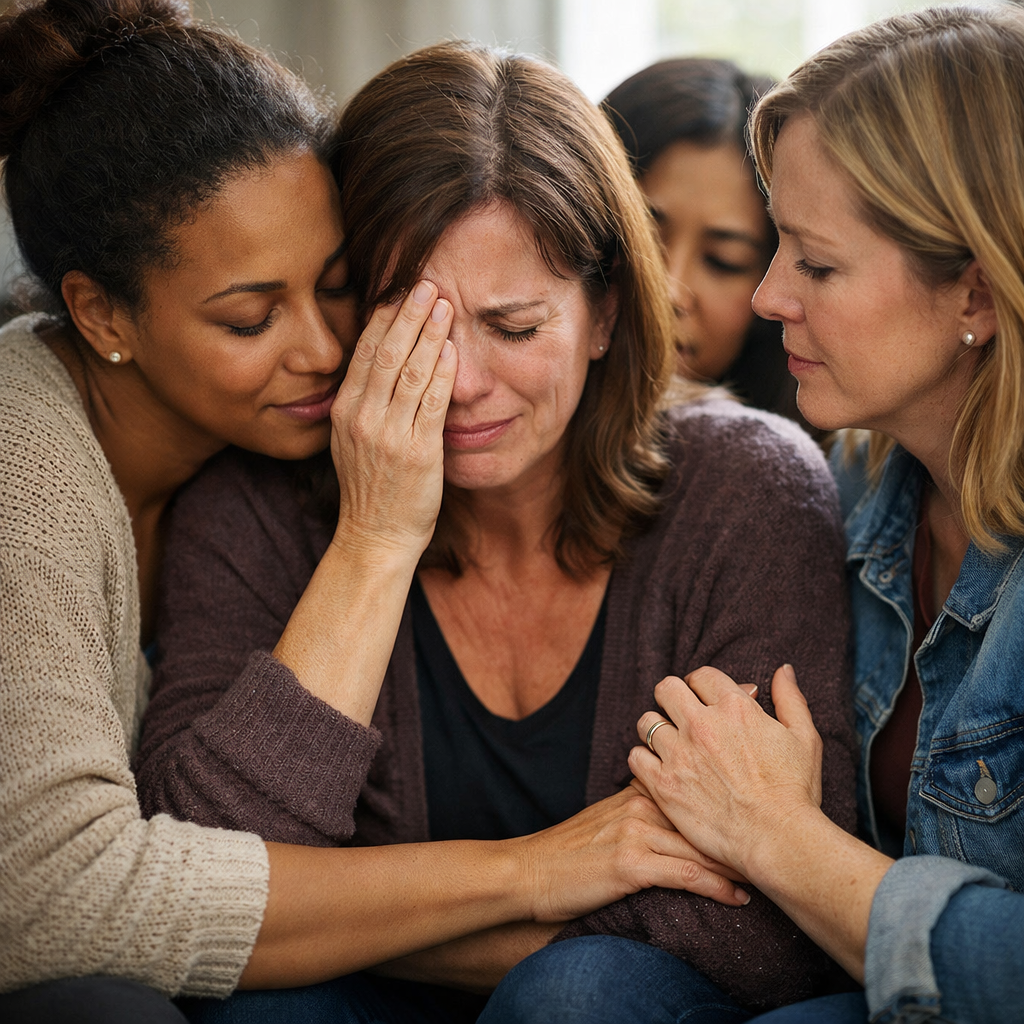
Last week, a very unfortunate incident occurred in our residential community.
One of our housekeeping staff lost her 22-year-old son in an accident at a construction site.
He left home that morning like many young men do every day, carrying dreams far bigger than his circumstances. He never returned.
His mother had invested years doing physically demanding work so her son could study, find a good job, and build a life she never had the chance to live. Like millions of parents, she had quietly invested every sacrifice into a single hope—her child.
In one cruel moment, that future disappeared.
As I watched people gather around her, offering condolences, I found myself thinking about something different.
Not about death.
Not about grief.
But about the way we respond to parents who have lost a child: whether we help them more by speaking the child’s name and sharing memories, rather than avoiding the topic.
We regularly struggle to find the right words. Afraid of reopening wounds, we avoid mentioning the child’s name altogether. We speak in careful whispers, change the subject, or simply say, “Be strong,” before moving on.
Our silence comes from kindness.
But does it always help?
I wonder whether many grieving parents would rather hear someone say their child’s name.
Perhaps they want someone to remember his smile, his dreams, his kindness, his mischievous nature, or the way he cared for others.
Perhaps they want reassurance that their son or daughter mattered—not only to them but also to the world around them.
Instead, an implicit rule often takes over.
We behave as though mentioning the child will increase the parents’ pain.
Yet the pain is already there.
Every waking moment.
Every empty chair.
Every festival.
Every birthday that will never be celebrated together again.
The absence does not disappear because everyone chooses silence.
In fact, silence can sometimes deepen loneliness.
Several years ago, I read an observation from a bereaved parent that has stayed with me. She said, “The greatest gift someone gave me was to speak about my son as though he still belonged in our conversations.”
Those words changed my understanding of grief.
Love does not end because life does.
Memories do not become forbidden because someone has passed away.
For parents, talking about their child may not intensify grief. It may instead remind them that others remember him too.
What if our condolences were different?
What if, instead of saying only, “I am so sorry,” we also said:
“I remember how proudly you spoke about your son.”
“He always greeted everyone with such respect.”
“You raised a wonderful young man.”
“I know how much he loved you.”
These are not just comforting words.
They honour a life.
They acknowledge that behind the tragedy was a person possessing dreams, laughter, friendships, and a future.
No parent wants their child to become invisible simply because he is gone.
Of course, grief remains deeply personal. Some parents may not wish to talk immediately, while others may welcome every memory. There is no universal rule. The most compassionate response is to gently follow their lead, while letting them know that speaking their child’s name is always welcome.
Perhaps the greatest fear after losing someone is not only that they are gone, but that they will slowly be forgotten.
We cannot change what happened.
We cannot remove a mother’s heartbreak.
But we can guarantee that the life her son lived is remembered with tenderness.
Dignity and love.
Sometimes, being different is not about saying more.
It is about having the courage to remember.
And perhaps that is one of the most meaningful condolences we can offer: to remember, and to speak.